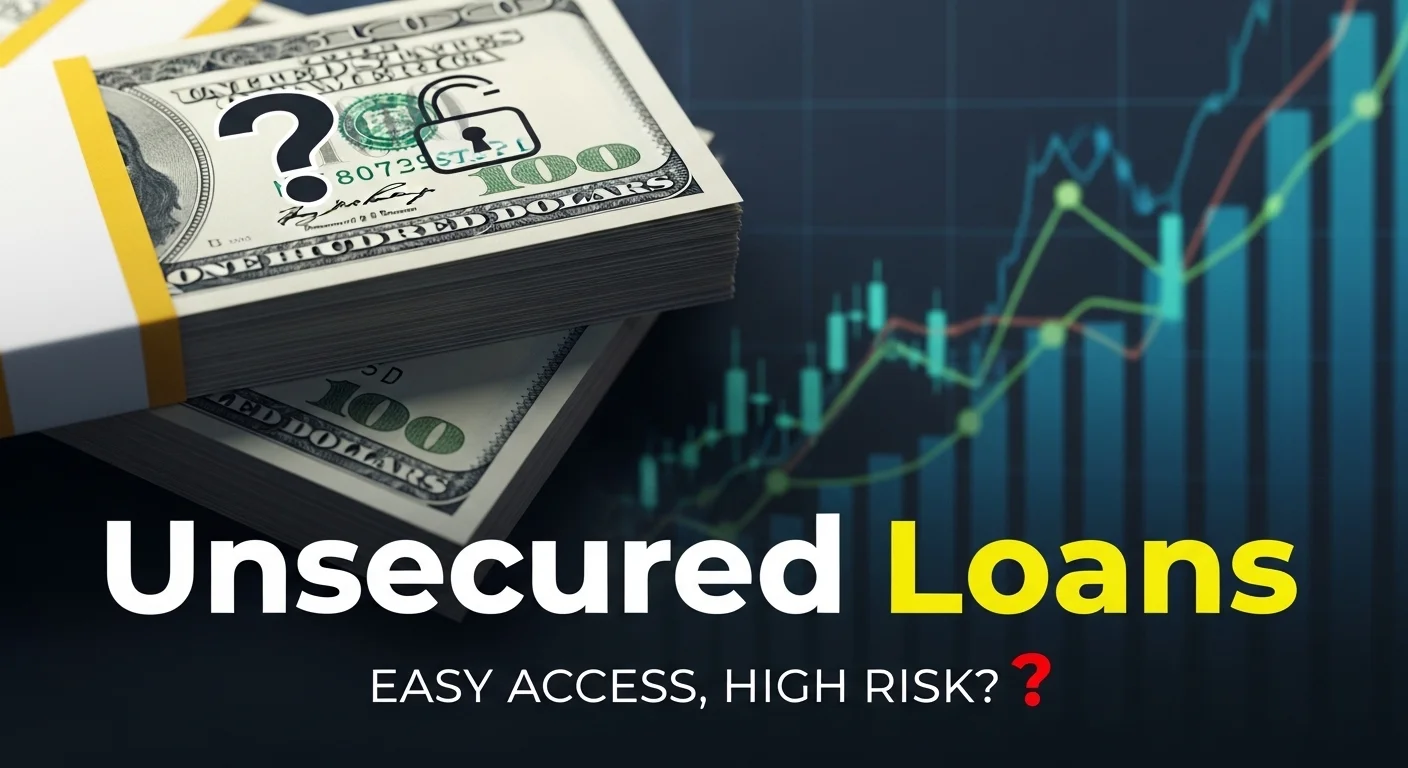
Need to borrow money but don’t want to put your home, car, or other assets at risk? An unsecured loan might be exactly what you’re looking for. Unlike secured loans that require collateral, unsecured loans are based solely on your creditworthiness and promise to repay.
Millions of Americans choose unsecured loans each year for everything from debt consolidation to home improvements, medical expenses, and major purchases. Understanding how these loans work, what lenders look for, and how to qualify for the best terms can save you money and give you peace of mind.
This comprehensive guide covers everything you need to know about unsecured loans in 2026, from basic definitions to advanced approval strategies.
What is an Unsecured Loan?
An unsecured loan is a type of financing that doesn’t require you to pledge any assets as collateral. Instead of securing the loan with property, vehicles, or savings, lenders approve you based on factors like credit score, income, employment history, and overall financial health.
Also known as signature loans or personal loans, unsecured loans offer borrowers the freedom to access funds without risking their possessions. If you default on an unsecured loan, the lender cannot automatically seize your assets, though they can take other legal action to recover the debt.
Common types of unsecured loans include:
- Personal loans
- Credit cards
- Student loans (most federal student loans)
- Medical financing
- Business lines of credit
- Payday loans (not recommended due to high costs)
How Unsecured Loans Work
Understanding the mechanics of unsecured lending helps you navigate the application process more effectively.
The Application Process
When you apply for an unsecured loan, lenders evaluate your application through several steps:
1. Pre-qualification: Many lenders offer soft credit checks that let you see potential rates without impacting your credit score.
2. Formal application: You submit detailed information about income, employment, debts, and financial obligations.
3. Credit review: Lenders pull your full credit report and verify the information you provided.
4. Underwriting: The lender assesses your risk level and determines your interest rate and loan amount.
5. Approval and funding: If approved, you receive the loan terms. Once you accept, funds are typically deposited within 1-7 business days.
Repayment Structure
Most unsecured personal loans follow a fixed repayment schedule:
- Fixed monthly payments: Same amount each month for the loan term
- Fixed interest rate: Rate stays constant throughout repayment
- Loan terms: Typically 2-7 years (24-84 months)
- Loan amounts: Usually $1,000 to $100,000
- No prepayment penalties: Many lenders allow early payoff without fees
Secured vs. Unsecured Loans: Key Differences
Choosing between secured and unsecured loans depends on your financial situation, risk tolerance, and borrowing needs. Here’s how they compare:
Unsecured Loans
Advantages:
- No risk of losing assets if you default
- Faster approval process (no appraisals needed)
- More flexible use of funds
- Simpler application with less documentation
- Available to renters and those without significant assets
Disadvantages:
- Higher interest rates than secured loans
- Stricter credit requirements
- Lower maximum loan amounts
- May include origination fees
- Credit score damage if you default
Secured Loans
Advantages:
- Lower interest rates
- Higher borrowing limits
- Easier approval with fair credit
- Longer repayment terms available
- May help build or rebuild credit
Disadvantages:
- Risk of losing collateral (home, car, savings)
- Longer application process
- Requires asset ownership
- May involve appraisal fees
- Potential for owing more than collateral value
Who Qualifies for Unsecured Loans?
Because unsecured loans carry more risk for lenders, approval requirements tend to be stricter than secured loans. However, many Americans can qualify with the right preparation.
Credit Score Requirements
Your credit score is the most important factor in unsecured loan approval:
- Excellent credit (740+): Best rates, highest approval odds, largest loan amounts
- Good credit (670-739): Competitive rates, strong approval chances
- Fair credit (580-669): Higher rates, moderate approval likelihood
- Poor credit (below 580): Very high rates or denial from traditional lenders
Most lenders prefer a minimum score of 640-660 for unsecured personal loans, though some specialize in working with lower credit scores.
Income and Employment Verification
Lenders need confidence that you can repay the loan. They typically require:
- Minimum annual income: $25,000-$40,000 (varies by lender)
- Stable employment: At least 2 years in current job or field
- Proof of income: Pay stubs, tax returns, or bank statements
- Low debt-to-income ratio: Ideally below 40%
- Verifiable employment: Contact information for employer verification
Additional Eligibility Criteria
Beyond credit and income, lenders consider:
- Age: Must be at least 18 years old (19-21 in some states)
- Citizenship: U.S. citizen or permanent resident
- Bank account: Active checking or savings account
- Valid identification: Driver’s license, passport, or state ID
- Contact information: Valid phone number and email address
Where to Get Unsecured Loans
Multiple lenders offer unsecured loans, each with different strengths, requirements, and rate structures.
Online Lenders
Online lenders dominate the unsecured loan market with competitive rates and streamlined processes.
Top online lenders:
- SoFi: No fees, unemployment protection, member benefits
- Marcus by Goldman Sachs: No fees, flexible payment dates
- LightStream: Low rates for excellent credit
- Upgrade: Fair credit accepted, fast funding
- Prosper: Peer-to-peer lending platform
- Avant: Specializes in fair credit borrowers
Credit Unions
Credit unions often provide the lowest rates on unsecured loans, especially for members with good credit and established relationships.
Benefits of credit union loans:
- Lower interest rates
- Fewer fees
- Personalized service
- More flexible underwriting
- Financial education resources
Traditional Banks
Major banks offer unsecured personal loans with relationship discounts for existing customers.
Bank advantages:
- Branch access for in-person service
- Relationship discounts (0.25%-0.50% rate reduction)
- Integrated banking services
- Established reputation
- Faster approval for existing customers
Common Uses for Unsecured Loans
Unsecured loans offer versatile funding for various financial needs:
- Debt consolidation: Combine multiple high-interest debts into one payment
- Home improvements: Kitchen remodels, bathroom updates, repairs
- Medical expenses: Unexpected healthcare costs, dental work, surgeries
- Major purchases: Appliances, furniture, electronics
- Wedding expenses: Ceremony, reception, honeymoon costs
- Moving costs: Relocation expenses, security deposits
- Emergency expenses: Urgent car repairs, family emergencies
- Business startup costs: Small business expenses, equipment
- Education: Continuing education, certifications, training
- Vacation: Travel expenses (though not always recommended)
Interest Rates and Fees on Unsecured Loans
Understanding the cost structure helps you compare offers and choose the best loan.
Typical Interest Rate Ranges
Unsecured loan rates vary significantly based on creditworthiness:
- Excellent credit: 6% – 12% APR
- Good credit: 10% – 18% APR
- Fair credit: 16% – 25% APR
- Poor credit: 25% – 36% APR
These rates are typically higher than secured loans because lenders take on more risk without collateral.
Common Fees to Watch For
- Origination fees: 1% – 8% of loan amount (deducted upfront)
- Late payment fees: $25 – $50 per missed payment
- Prepayment penalties: Rare but can be 2% – 5% of remaining balance
- Check processing fees: $5 – $15 if you pay by check instead of ACH
- Returned payment fees: $25 – $40 for insufficient funds
- Application fees: Uncommon but occasionally $25 – $100
Always review the loan’s APR (Annual Percentage Rate), which includes both interest and fees, to understand the true cost.
How to Get the Best Unsecured Loan Rate
Strategic preparation can significantly reduce your interest rate and save thousands of dollars.
Improve Your Credit Score
Even a 20-30 point increase can move you into a better rate tier:
- Pay all bills on time for at least 6 months
- Reduce credit card balances below 30% utilization
- Dispute any errors on your credit report
- Avoid opening new credit accounts before applying
- Keep old accounts open to maintain credit history length
Shop Multiple Lenders
Compare rates from at least 3-5 lenders:
- Use pre-qualification tools (soft credit checks)
- Check online lenders, credit unions, and banks
- Submit formal applications within 14-45 days
- Compare APRs, not just interest rates
- Review all fees and terms carefully
Consider a Co-Signer
Adding a creditworthy co-signer can dramatically reduce your rate. The co-signer’s good credit and income strengthen your application, potentially saving you thousands in interest.
Just remember that your co-signer is equally responsible for repayment.
Choose a Shorter Loan Term
Lenders offer better rates for shorter repayment periods:
- 2-3 year terms: Lowest rates
- 4-5 year terms: Moderate rates
- 6-7 year terms: Higher rates
While monthly payments are higher with shorter terms, you’ll pay significantly less in total interest.
Risks and Considerations
While unsecured loans protect your assets, they come with important considerations:
Impact of Default
If you fail to repay an unsecured loan:
- Credit score damage: Significant drop (100+ points)
- Collection actions: Account sent to collections agency
- Legal consequences: Lender may sue for repayment
- Wage garnishment: Court may order salary withholding
- Bank account levy: Funds may be frozen or seized
- Long-term credit impact: Default stays on credit report for 7 years
Debt Trap Potential
Without collateral requirements, it’s easier to borrow more than you can afford. Be realistic about your ability to make monthly payments along with your other financial obligations.
Higher Overall Costs
Unsecured loans typically cost more than secured alternatives. If you have assets available for collateral and feel confident in your ability to repay, a secured loan might save you money.
Alternatives to Unsecured Loans
Before committing to an unsecured loan, consider these alternatives:
- 0% APR credit cards: For purchases you can repay within 12-18 months
- Home equity loans/HELOC: Lower rates if you own a home
- 401(k) loans: Borrow from retirement (has risks)
- Payment plans: Negotiate directly with service providers
- Family loans: Borrow from relatives (get terms in writing)
- Emergency savings: Use your own funds if available
- Side income: Earn extra money instead of borrowing
- Financial assistance programs: Government or nonprofit help for specific needs
Final Thoughts: Is an Unsecured Loan Right for You?
Unsecured loans offer a valuable financing option when you need funds but don’t want to risk your assets. They provide flexibility, accessibility, and relatively quick funding—but they come at a higher cost than secured alternatives.
Before applying, honestly assess your situation:
- Can you afford the monthly payment comfortably?
- Have you exhausted less expensive alternatives?
- Is this for a necessary expense or a want?
- Will this loan improve your financial situation long-term?
- Do you have a solid repayment plan?
If you decide an unsecured loan is right for you, take time to improve your credit, shop multiple lenders, and read all terms carefully. The effort you invest in finding the best loan can save you thousands of dollars and set you up for successful repayment.
Remember: borrowing money is a tool, not a solution. Use unsecured loans strategically to achieve your financial goals while protecting your long-term financial health.
Disclaimer: This article provides educational information only and does not constitute financial advice. Loan terms, rates, and availability vary by lender and individual circumstances. Always review complete loan agreements and consult with a financial advisor before making borrowing decisions.